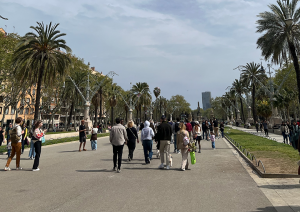
In cities around the globe, a quiet revolution is reshaping how we think about speed. It’s not about enforcing limits through tickets and signs. It’s about designing streets, transportation systems, and expectations that make slower, safer movement the default.
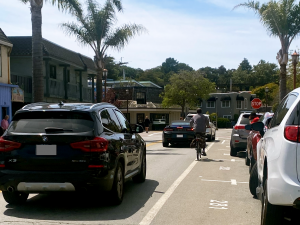
As we celebrate Bike Month, it is important to look at how the changing size of American vehicles affects road safety. Over the last decade, SUVs and trucks have become significantly taller, wider, and heavier. For cyclists, this "size creep" creates new risks that standard infrastructure wasn't designed to handle.
Step onto a busy street at rush hour and you will see the climate challenge in motion: long lines of cars, most carrying just one person, inching forward. Now imagine that same street with fewer cars and, instead, more buses moving steadily along, each carrying dozens of people.
At a red light, your phone buzzes. It’ll only take a second… right? That tiny moment is where distracted driving begins and it’s something nearly all of us have experienced. April is National Distracted Driving Awareness Month.
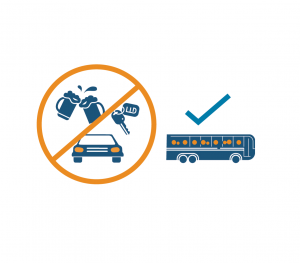
Drunk and impaired driving isn’t a new problem. Everyone knows the risks, the laws, and the statistics. But if awareness hasn’t solved this deadly social problem yet, what will? The full solution likely includes building systems that prevent it entirely.
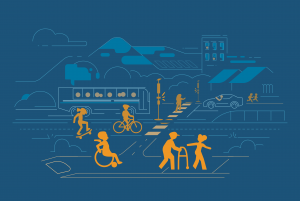
October is National Pedestrian Safety Month, a time to highlight a simple fact: walking should never come with risk. Whether it’s walking to school, to work, to transit, in a parking lot or just around the block, we are all pedestrians at some point.
May is here, and with it National Bike Month, the perfect opportunity to embrace two wheels over four. Bike Month isn't just about cycling: it's about sustainability, health, community and reimagining our daily commutes.
April marks National Distracted Driving Awareness Month, a time to reflect on the critical dangers of inattentiveness behind the wheel. Earlier this month, the National Highway Traffic Safety Administration (NHTSA) reinforced this message through its nationwide 'Put the Phone Away or Pay' campaign, held from April 10 to 14, 2025.
Despite advancements in technology, women are significantly more likely to suffer severe injuries and fatalities in car crashes—not because they are worse drivers, (women account for fewer auto crashes than men in America) but because the safety features in vehicles do not account well enough for their anatomy.
As we approach the end of Pedestrian Safety Month, it’s important to remember that the focus on pedestrian safety doesn’t stop here. Although the month’s campaign is wrapping up soon, the significance of protecting those on foot continues year-round.